
US: Supreme Court Rejects Trump Policy Restricting Transgender Inmate Care
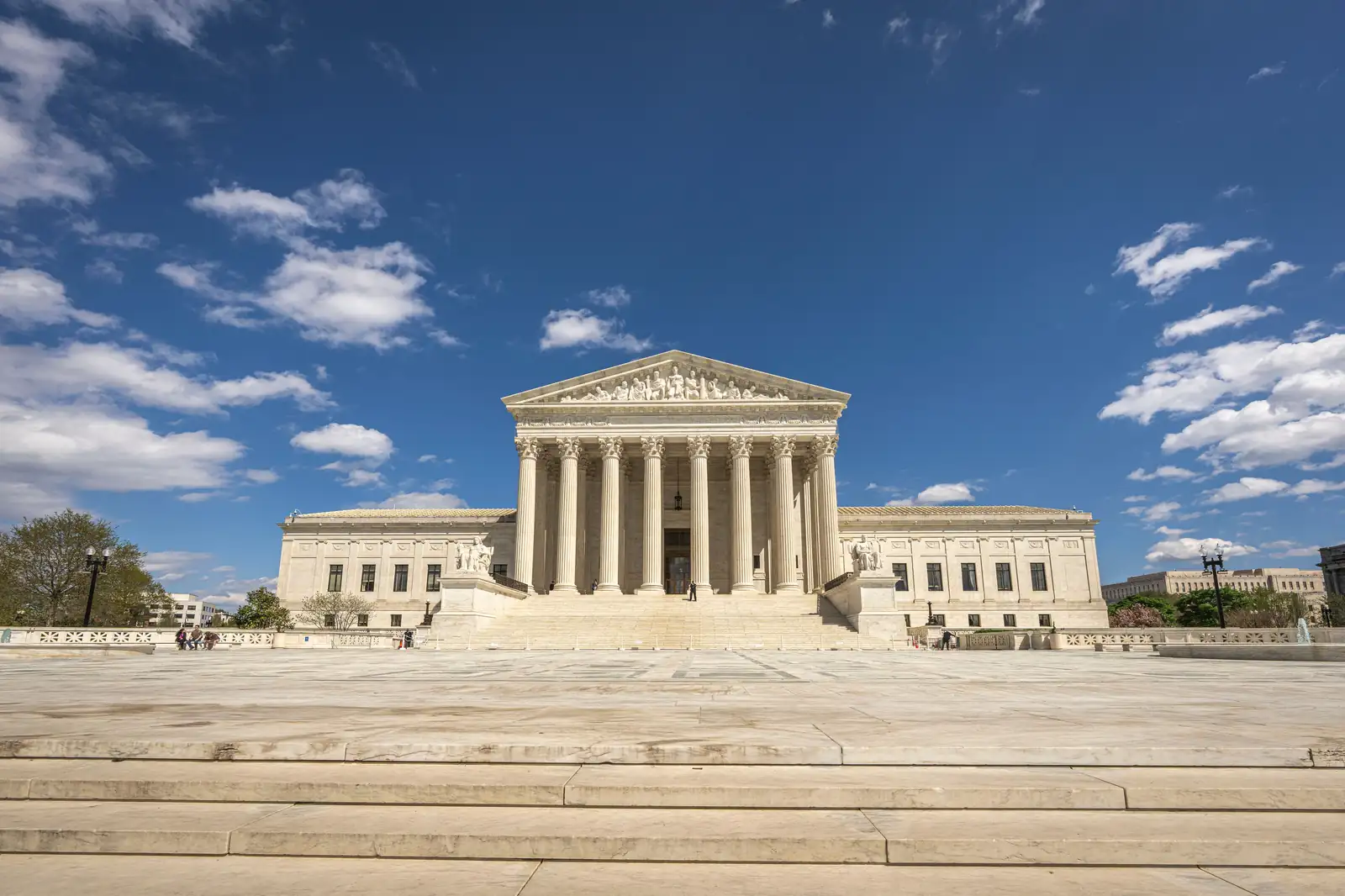
This image is for illustrative purposes only and is not directly related to this story. Image source: Mark Stebnicki
On October 21, 2026, the Supreme Court of the United States rejected an emergency application filed by President Donald Trump's administration, barring federal authorities from enforcing a restrictive policy that would curtail gender-affirming medical care for approximately 1,000 transgender inmates in federal custody. In an unsigned order containing no detailed reasoning, the court left intact a lower court injunction while noting that conservative Justices Clarence Thomas and Samuel Alito would have granted the administration's request.
The contested regulations were introduced by the Federal Bureau of Prisons (BOP) over the preceding 18 months following a January 2025 executive order instructing federal agencies to recognize only immutable biological sex classifications. Reversing framework policies that had provided access to hormone therapy since 1992, the BOP sought to eliminate gender transition surgeries, hormone treatments, and social accommodations such as wigs and cosmetics, leaving mental health counseling and antidepressants as the sole permitted interventions. Lead plaintiffs Alishea Kingdom, Jas Kapule, and Solo Nichols challenged the rules under the Eighth Amendment's prohibition on cruel and unusual punishment. Earlier in 2026, U.S. District Judge Royce Lamberth blocked the directive, ruling that the agency cited zero evidence from its own medical professionals to justify abandoning decades of practice and concluding that the rationale was a pretext to satisfy the president's executive order. In September 2026, a divided panel of the U.S. Court of Appeals for the District of Columbia Circuit upheld Lamberth's injunction by a 2-1 vote.
Following the Supreme Court's order, American Civil Liberties Union (ACLU) attorney Li Nowlin-Sohl welcomed the decision as a vital safeguard for incarcerated individuals, stating that denying medically necessary gender-affirming healthcare violates fundamental constitutional protections. Conversely, White House spokeswoman Allison Schuster criticized the order and pledged that the administration would continue pursuing restrictions on such medical practices, while Solicitor General D. John Sauer argued in court filings that the lower judiciary had improperly substituted its own judgment for agency policymaking.
From an institutional perspective, the order represents a notable procedural victory for transgender rights advocates before a Supreme Court with a 6-3 conservative majority, which previously upheld state bans on transgender athletes in June 2026 and restrictions on youth gender-affirming care in 2025. The ruling underscores that even when executing presidential directives, federal agencies remain bound by administrative law standards requiring empirical justification and clinical evidence before dismantling established constitutional healthcare protections.
North American Editorial Office: Liam Smith
Source: Compiled from Supreme Court of the United States orders and American Civil Liberties Union filings
References:
Supreme Court of the United States - Official Orders of the Court
United States Court of Appeals for the District of Columbia Circuit
Federal Bureau of Prisons - Official Policy Statements
Related Content

US: Savannah Pride Attendee's Reflection on Boy's First Pride Resonates Widely

US: Trans Mutual Aid Group Accuses Seattle City Workers of Targeted Park Sweeps

US: CBS News Texas Probes Dark Money Behind Millions of Fake Trans Mailers

US: Virginia Voters Weigh Constitutional Amendment to Guarantee Marriage Equality

US: Chappell Roan Raises $2 Million for Trans Youth at LA Benefit

US: California Judge Allows Children's Hospital to Restrict Care for Some New Trans Patients