
East Africa: Over 2,400 LGBTQIA+ Refugees Fleeing Ethiopia Face Violence in Camps
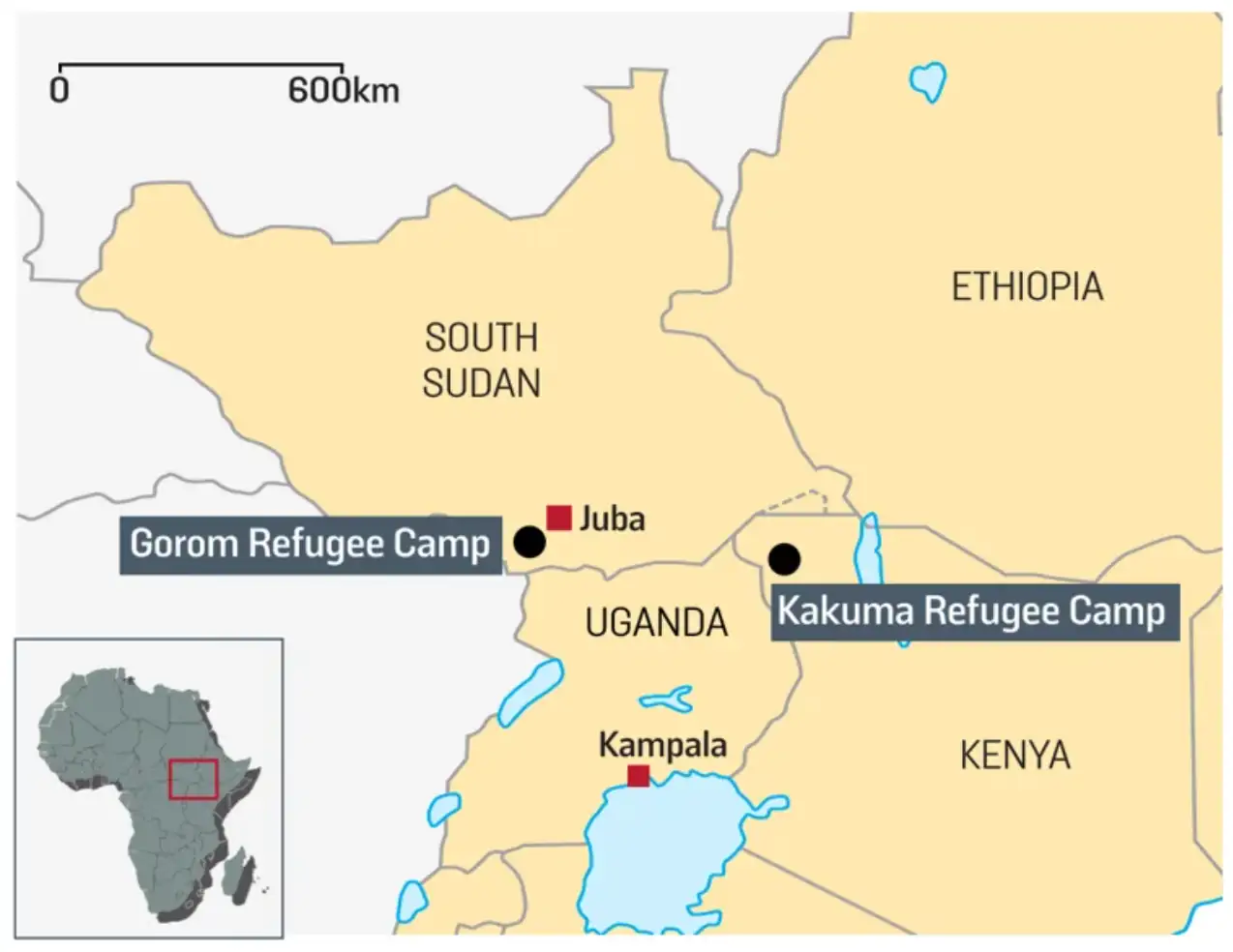
Map showing Gorom Refugee Camp near Juba in South Sudan and Kakuma Refugee Camp in Kenya. (Map courtesy of LG Graphics) Image source: 76crimes
In November 2026, escalating armed conflict in Ethiopia's Oromia and Somali regions forced nearly 50,000 people to flee across the border into Kenya, among them an estimated 2,400-plus LGBTQIA+ people seeking asylum. However, according to a report by the International PRIDE Centre, an LGBT rights organisation with operations in Kenya, these refugees have found that while camps may offer refuge from war, they provide no shelter from systemic homophobia, hate speech and targeted violence.
Many arrivals are directed to Kenya's sprawling Kakuma refugee camp, which hosts more than 225,000 residents. While Kenyan law formally recognises asylum claims based on sexual orientation, gender identity and gender expression (SOGIESC), authorities have unofficially frozen refugee registration for LGBTQIA+ applicants since 2019, cutting them off from the full suite of rights and protections afforded to other refugees. Within Kakuma, LGBTQIA+ refugees placed in a designated area face violent attacks on an almost weekly basis and report frequent discrimination and dehumanising treatment, including from some government, UN agency and NGO staff, prompting many to flee to urban and semi-urban areas and several hundred to undertake hazardous journeys onward to South Sudan.
Conditions in South Sudan offer little reprieve. At the Gorom Refugee Settlement, which is under the authority of the South Sudanese government and supported by UNHCR and other organisations, about 16,000 refugees live, including an estimated 600 LGBTQIA+ refugees, according to a refugee interviewed by Geographical, the magazine of the Royal Geographical Society. The magazine reports that life there remains a daily struggle against discrimination, hate speech, verbal harassment, intimidation and targeted attacks. The PRIDE Centre's community surveys show that 92% of forcibly displaced LGBTQIA+ people have experienced targeted sexual and gender-based violence (SGBV) in the countries where it works, and LGBTQIA+ people frequently face violence from community members when attending food distributions or attempting to access water points.
In response to the crisis, the PRIDE Centre issued an urgent appeal to humanitarian aid organisations, including UN agencies, NGOs, donors and the Red Cross. The organisation urged response agencies to draw on the expertise of national, local and specialised LGBTQIA+ service providers, including LGBTQIA+ refugee-led organisations, and to establish referral mechanisms so that LGBTQIA+ people are not discriminated against or left behind. Core humanitarian needs include safe shelters separate from collective shelters organised on a binary sex basis; appropriate care and resources for survivors of sexual and gender-based violence; sexual and reproductive health services and resources; protection services, including legal assistance and civil registration; health services free from discrimination; and safe access to basic survival necessities, including water and food.
African Editorial Office: Imani Makena
Source: 76crimes, Geographical, Citizen Digital
References:
Geographical: https://geographical.co.uk/news/lgbtq-refugees-face-persecution-in-south-sudans-gorom-settlement
Citizen Digital: https://citizen.digital/article/kenya-hosting-40000-ethiopian-refugees-fleeing-border-conflicts-n393567
Disclaimer: Some content is cited from open internet sources for non-commercial reference. Contact us for any infringement.
Related Content
Mali: Court Imposes First Prison Sentences Under New Anti-Homosexuality Law Following Two Fatal Attacks in Bamako

Morocco: Motown Hitmaker Lee Garrett Releases Solidarity Single 'Hurriya' to Free Jailed Activist Ibtissame Lachgar

Cameroon: Transgender Woman Brutally Attacked in Douala, Highlighting LGBTI Vulnerability
South Africa: Thousands Gather for 37th Johannesburg Pride in Sandton
Cameroon: Gay Man Brutally Beaten in Dating App Ambush, Fears Police Due to Anti-LGBTQ Law

Ghana: Parliament Speaker Admits Rushed Anti-LGBTQ+ Bill Has Flaws Ahead of Reconsideration