On Thursday, February 15, 2024, local time in Greece, Greek lawmakers passed a bill legalizing
same-sex marriage and adoption by an overwhelming majority.
I am currently in Athens, the capital of Greece. Over the past few days, I have visited several relevant locations and interviewed some local residents. Today, I’d like to discuss this issue in depth with you all.
Is this a major victory or a national liability?
First of all, the passage of this bill is undoubtedly viewed as a landmark victory for
LGBTQ rights.
However, why is it still considered major
news and a significant milestone in 2024—a time when many Western countries, and even some Asian nations and regions, have long since legalized
same-sex marriage—that a European Schengen country is “late to the game” in passing such legislation?
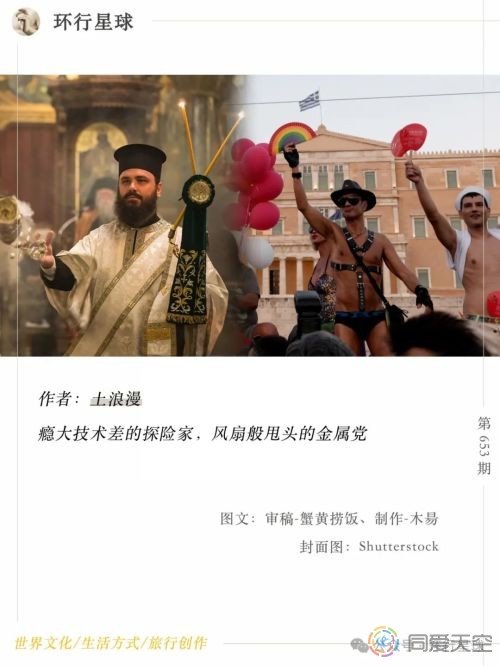
That’s because Greece is the first Orthodox Christian country to pass such legislation!
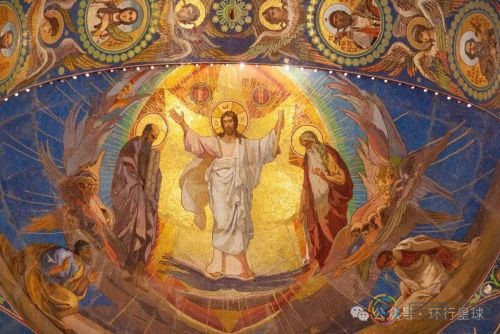
Orthodox Christianity is one of the three major branches of Christianity,
the other two being Catholicism and Protestantism.
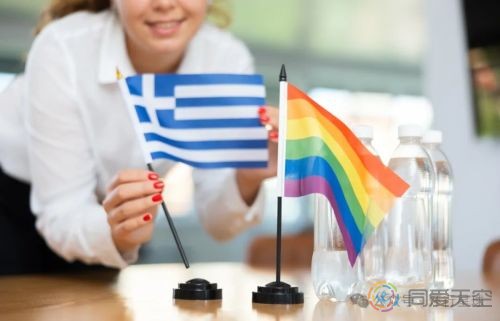
Image: Shutterstock
Unlike European countries such as the Netherlands, the United Kingdom, and many Nordic nations—where the church has largely become a purely spiritual institution—the Greek Orthodox Church still wields significant power.
Moreover, Greece’s overall cultural atmosphere is far more traditional and conservative. For a long time prior to this, the Greek Orthodox Church had strongly opposed the bill and exerted significant pressure against it.
However, the bill was pushed forward by the conservative government and was ultimately passed.
When the results were announced that day, the room erupted in prolonged applause.
Photo: AP
However, this bill still has a “catch”: while the legislation grants
same-sex couples the right to marry and adopt, it does not grant them the right to surrogacy.
With this, Greece has officially become the first Orthodox Christian country, the 16th EU member state, and the 37th country in the world to legalize
same-sex marriage.
The New Democracy party, led by Greek Prime Minister Mitsotakis, drafted the legislation. Addressing lawmakers before the vote, he stated, “Today is a day of joy for every citizen.”
He added that the legislation embodies the country’s democratic principles and its ability to make Greek society inclusive and provide equal rights to all citizens.
Following the passage of the legislation,
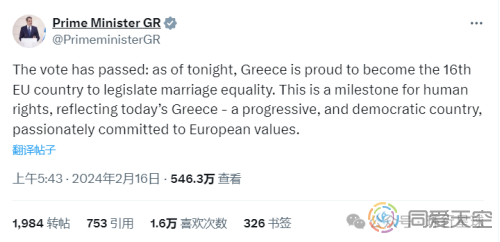
he also highlighted its landmark significance on Twitter,
“This is a symbol of Greece’s progress and democracy,
and reflects Greece’s passion for European values.”
Photo: Twitter
The legislation garnered rare cross-party support, securing 176 votes on Thursday evening from four different parties in Greece’s 300-seat parliament. Several smaller parties rejected the bill, while 124 lawmakers openly opposed it or abstained from this historic vote, the majority of whom were from the ruling conservative New Democracy party.
Hundreds of
LGBTQ supporters, eager to witness history, camped out outside the parliament and erupted in cheers when the vote was announced.
A
gay couple embraced in excitement
Photo: Reuters
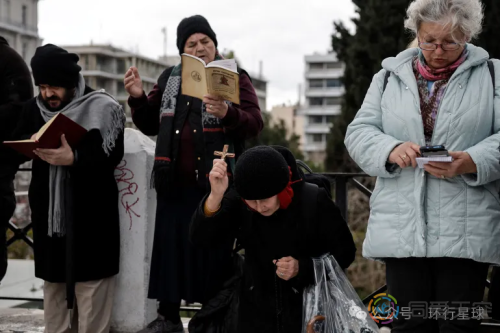
Meanwhile, opponents from the Orthodox Church waved Bibles, icons, and crosses as they prayed together in public.
The strong opposition from the Greek Orthodox Church and countless believers was expected; they believe the bill’s passage will undermine traditional family values, and that approving it could lead to
same-sex couples gaining access to surrogacy.
This mirrors the resistance encountered by Western European countries when they pushed for similar legislation more than a decade ago.
Believers also stood outside parliament praying in opposition
Photo: Reuters
Before the vote on the bill, Orthodox Church leader Archbishop Ieronymos II stated that a roll-call vote should be held so that voters could see which lawmakers voted in favor.
The far-right party Elliniki Lysi stated that the bill is “anti-Christian” and will harm Greece’s national interests.
So, what is the public sentiment in Greece?
Polls show that most Greeks support this reform. At the same time, most Greeks also oppose extending parental rights to
same-sex male couples through surrogacy.
Polls show that most Greeks support this reform
Image: ekathimerini
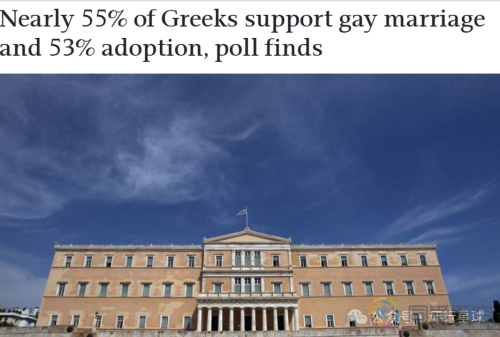
The Greek website ekathimerini reported that poll results show 55% of Greeks support the legalization of
same-sex marriage, while 53% support
same-sex couples adopting children.
The Low-Key Celebration
All about restraint
First, let me discuss the significance of the Orthodox Church in Greek society, as I have observed it.
Through my recent travels across Greece, I’ve noticed a very unique phenomenon.
Namely, it’s extremely common to see ordinary citizens making the sign of the cross!
What does this mean?
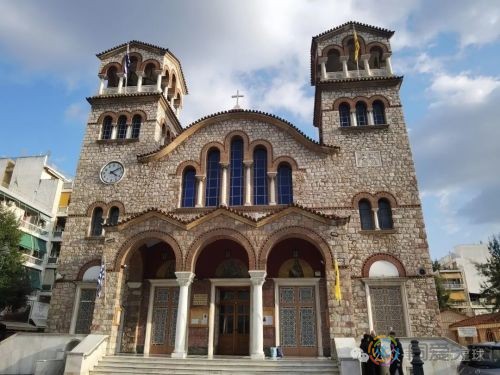
It means that a significant proportion of Greek citizens—whether walking down the street or riding the bus or subway (some subway lines run above ground)—will make the sign of the cross whenever they spot a church along the way, whether it’s a small neighborhood chapel or a grand cathedral on the main road.
This is a sight I have never witnessed in many countries in Western or Northern Europe. From my observations, these devout believers are primarily middle-aged and elderly. The older they are, the higher the proportion.
Throughout Greece, whether in big cities or small villages,
churches of all sizes are visible everywhere.
On February 17 and 18, I walked a total of 7.2 kilometers in downtown Athens, passing mainly through ordinary residential neighborhoods, though there were also some restaurants, bars, offices, and shops mixed in.
I walked not only on main roads but also ventured into some residential neighborhoods. Stopping and starting along the way, the entire journey took 4 hours and 26 minutes. I did not see a single rainbow flag anywhere, not even a rainbow emblem.
This situation would be unimaginable in Northwest Europe, or indeed in any other non-Orthodox European country. Back when other countries (on any continent) had just passed similar legislation, city streets were bustling with people and filled with the sound of drums and gongs; rainbow flags were scattered everywhere—on main streets, in residential areas, at restaurants, bars, and shops.
In southeastern France, people celebrate
LGBTQ Pride in a park
Photo: Shutterstock
A giant rainbow flag on the streets of Berlin
Photo: Shutterstock
People took to the streets to celebrate this historic moment. Most—if not the vast majority—of those who hung flags and took to the streets were not members of the
LGBTQ community; what they were actually celebrating was the fact that more people in society could receive fairer and more inclusive treatment.
Such scenes have been celebrated in grand style in countries like the Netherlands, France, and Germany.
However, in the three days since the legislation passed, I have not noticed even the slightest sign of it in most parts of Athens.
Apart from a gathering of related groups on “Constitution Square” in the very heart of Athens on the night the law was passed (though the turnout was nowhere near that of similar events in Northwestern Europe), there have been no related activities or outward signs of social celebration.
An ordinary neighborhood in downtown Athens
Photographed on February 17.
Athens is a place with a large expat population and a high degree of openness. If this is the case in the capital, then other small and medium-sized cities and rural areas naturally have even fewer signs of celebration or traces of this event.
Of course, if you look closely, you can still spot some “minor details.” For example, the day after the bill passed, I saw an elderly woman wearing a mask adorned with a rainbow flag at the supermarket.
To sum it up in one sentence: The legalization of
same-sex marriage in an Orthodox Christian country is all about restraint!
On-site conversations with Athens residents
On the afternoon of February 17, local time in Greece—the day after the bill was passed—I interviewed two local residents at the National Cultural Center of Greece in Athens (a comprehensive complex located on the Aegean coast that combines a library, gallery, arts exhibition center, and sports venue, and is a favorite spot among Athenians) to hear what ordinary people think about this issue.
National Cultural Center of Greece
Yannis, a man who looked to be in his mid-twenties (it’s impolite to ask someone’s age directly), began by stating that he supports the bill.
Secondly, he said that, in reality, the majority of Greeks do not support it; the day before yesterday was merely a legislative victory, and social acceptance is still a long way off. The overall atmosphere in Greek society remains conservative.
His words confirmed my own observations from the past few days.
This joy hasn’t reached the general public
Photo: Shutterstock
Anna, a woman around the same age as Yannis. She also began by stating her support for the bill, then discussed some other details.
Her view is the exact opposite of Yannis’s; she believes that the majority of the Greek public supports the passage of the bill.
Anna also had something to say about the fact that while the bill allows
same-sex couples to marry, it does not permit them to use surrogacy.
She explained that under Greek law, even heterosexual couples are not permitted to use surrogacy unless they have a medical condition preventing them from conceiving. This new bill is not specifically targeted at the
LGBTQ community.
A few hours after the bill was passed
announcing their marriage
Photo: Keep Talking Greece
Yannis added that, let alone surrogacy, even adopting a child is an extremely cumbersome process. Even for heterosexual couples, completing the adoption process can take two to three years.
During the review process, Greek authorities scrutinize prospective adoptive parents’ qualifications down to the smallest detail, even including their political leanings.
Consequently, the couple concluded that the strict measures regarding adoption and surrogacy are not targeted at any specific group, but apply to society as a whole.
It is worth noting that when referring to couples, they do not describe heterosexual couples as “normal couples,” but consistently use the term “couples composed of a man and a woman.”
This is because the younger generation in Europe has largely reached a consensus: sexual orientation is determined by genetic chromosomes, and one cannot claim that heterosexual couples are “normal” simply because they are in the majority, while couples defined by other genetic chromosomes are “abnormal.”
Surrogacy is illegal and strongly opposed in many countries
Image: Shutterstock
Meanwhile, mainstream media outlets tend to interview influential celebrities more frequently.
Stavros Gavriliadis is an allergist and
LGBTQ rights activist, as well as the biological father of a boy he and his partner are raising.
He said that since the child was born, his partner has been denied the right to do many things, such as picking up their son from school, collecting his report cards, or even taking him to the hospital in an emergency.
Gavriliadis noted that all of this has now changed.
Gavriliadis and his partner
clapped enthusiastically upon hearing the legislation had passed.
Photo: Keep Talking Greece
Maria Gavouneli, chair of the Hellenic National Commission for Human Rights, told The New York Times that this decision was “long overdue.”
Stella Belia, founder of Greece’s “Rainbow Family,” also called it “a major victory we’ve been fighting for over the years.”
Regarding the legalization of
same-sex marriage in Greece, this is a summary of information I have gathered from media reports and on-the-ground observations. Of course, this is far from a comprehensive overview; the long-term impact of legalizing
same-sex marriage on a country with a relatively strong religious atmosphere and a relatively traditional and conservative culture remains to be seen.