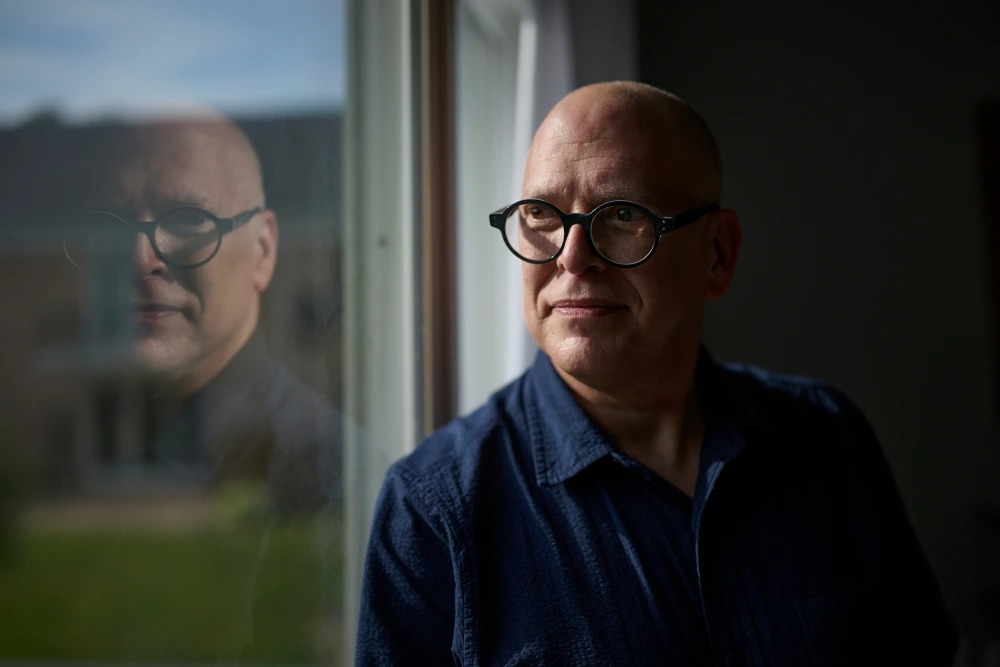
 Jim Obergefell, 58, at his home in Sandusky, Ohio, on June 15.
A decade since the U.S. Supreme Court’s landmark Obergefell v. Hodges ruling legalized same-sex marriage nationwide, some advocates warn the battle for marriage equality is far from over. Among them is Jim Obergefell, the plaintiff in the 2015 case who became its public face and remains a vocal advocate for LGBTQ rights.
“Ten years later, I never thought I’d still be talking about threats to marriage equality or the possibility of Obergefell being overturned,” Obergefell said in an interview.
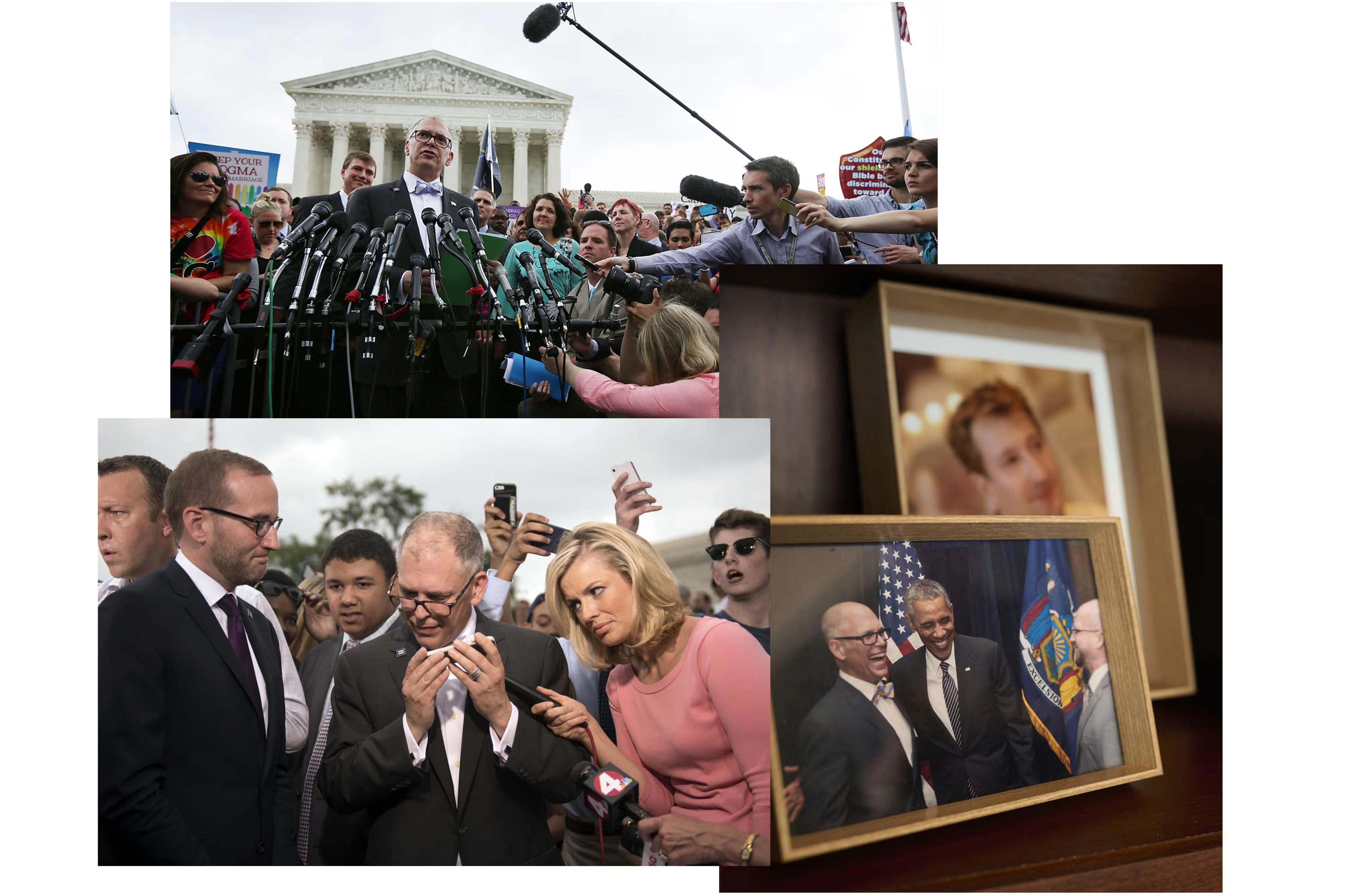
Clockwise from top: Jim Obergefell after the Supreme Court legalized same-sex marriage nationwide on June 26, 2015. At home, a framed photo of his late husband, John Arthur, who died of ALS before the decision was handed down, next to a photo of Obergefell with President Barack Obama. Obergefell on the phone with Obama on the steps of the Supreme Court after the court's landmark decision.
The 2015 ruling was a turning point for LGBTQ rights, but Obergefell expressed concern over recent comments from conservative Supreme Court justices—particularly after the court overturned Roe v. Wade in 2022, ending constitutional protections for abortion.
“For 49 years, people had that right, and it was taken away with the stroke of a pen,” Obergefell noted. “We have to learn from that.”
In his concurring opinion in Dobbs v. Jackson Women’s Health Organization—the case that overturned Roe—Justice Clarence Thomas explicitly cited Obergefell as a ruling the high court should revisit, alarming
same-sex marriage advocates. In a 2024 opinion, Justice Samuel Alito also questioned Obergefell, warning that Americans who oppose
same-sex marriage on religious grounds might be labeled bigots.
Over the past several months, Republican lawmakers in at least 10 states have introduced measures aimed at undermining
same-sex marriage rights. Many of these proposals, crafted with help from the anti-marriage equality group MassResistance, seek to prompt the Supreme Court to overturn Obergefell.
MassResistance stated that while these proposals face backlash and wouldn’t change policy even if passed, keeping opposition to
same-sex marriage in public discourse is a victory. The group argues marriage laws should be left to states and questions the constitutional basis of the 5-4 Dobbs ruling.
Obergefell’s fight for
same-sex marriage rights began with his own love story. In 2013, after his partner John Arthur was diagnosed with terminal ALS, the couple decided to marry. Due to Arthur’s health, they chartered a medical flight from their home state of Ohio to Maryland—where
same-sex marriage was legal—and wed on the tarmac before returning. When Ohio refused to recognize their marriage on Arthur’s death certificate after he passed, they turned to the courts.

Jim Obergefell with photographs of his late husband, John Arthur.
Arthur did not live to see the Supreme Court’s decision.
“People still stop me, hug me, often in tears,” Obergefell said. “They talk about what this ruling, what marriage equality, means to them or someone they love.”
Mary Bonauto, one of the attorneys who argued Obergefell before the Supreme Court, said no current cases threaten the ruling.
“There’s no imminent risk now, but one could emerge,” she noted. “I don’t have a crystal ball, but I know the Supreme Court declines 98-99% of cases it’s asked to hear each term, and there are many pressing issues.”
Public support for
same-sex marriage has grown sharply over the decade. A new Gallup poll shows 68% of Americans back legal
same-sex marriage, but Republican support has dropped 14 points since 2022 to 41%. Democratic support stands at 88%, creating a 47-point partisan gap—the widest since Gallup began tracking the issue in 1996.
The Respect for Marriage Act, signed into law in 2022, provides some federal protections for
same-sex marriage but stops short of requiring all states to issue marriage licenses to
same-sex couples.
Bonauto warned that overturning Obergefell would have massive ramifications, affecting not just
same-sex couples but institutions that have adapted to marriage equality.
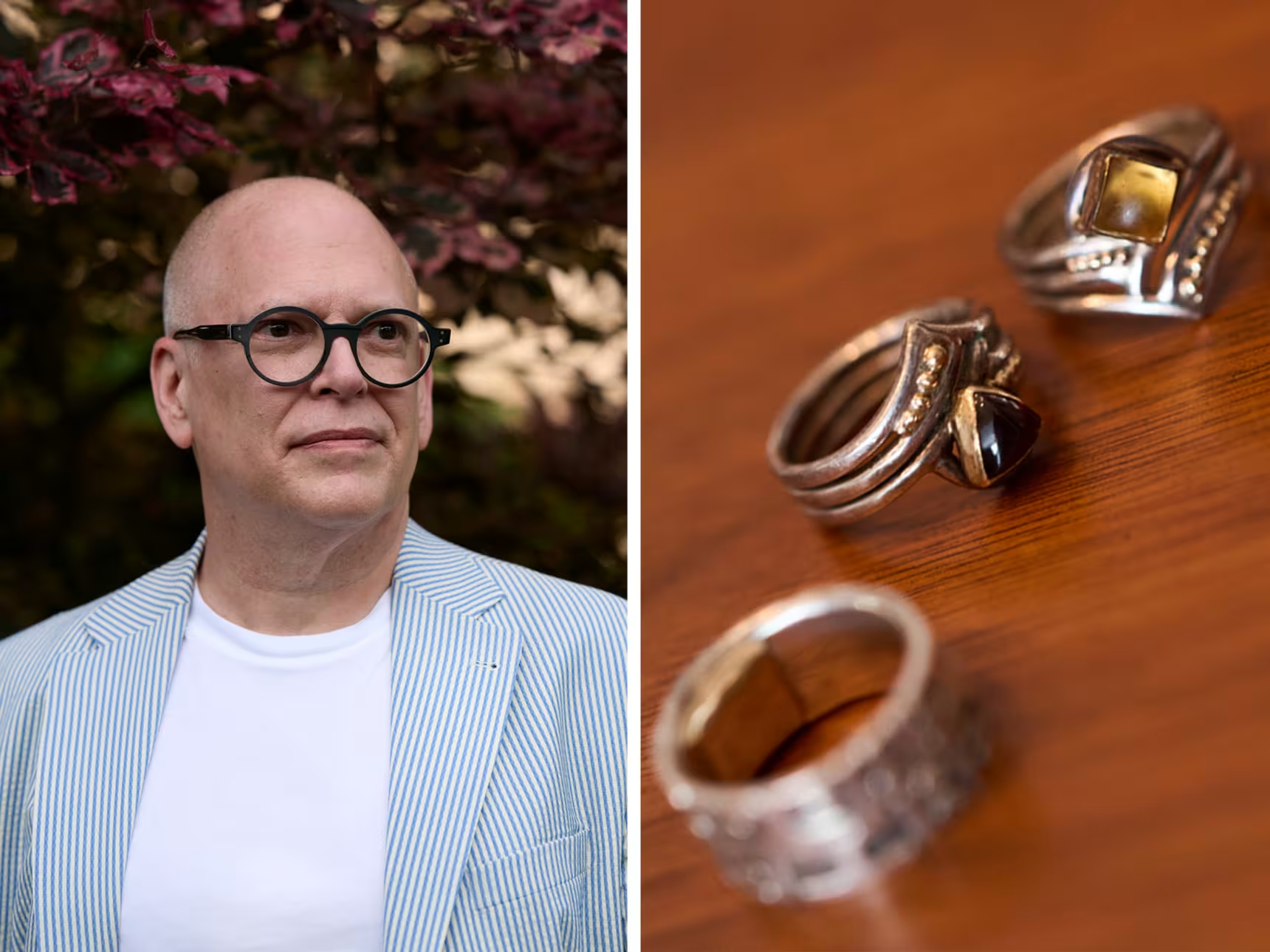
Obergefell's wedding band and the couple's anniversary rings.
“I understand why marriage has broad support, and it’s fine if some have mixed feelings—I can live with that,” Bonauto said. “But I truly believe most Americans won’t want to see this right taken away, nor the impact on couples, kids, institutions, insurers, health care providers, and employers.”
Despite the current political climate and his own worries, Obergefell remains hopeful.
“My husband John was incredibly optimistic, and he’s had a huge impact on me,” he said. “I have to believe we’ll prevail.”
North American Editorial Office: Robin