
Texas in the U.S. Passes Transgender Bathroom Law, Becoming the 20th State to Implement Such Restrictions
Source: NBC News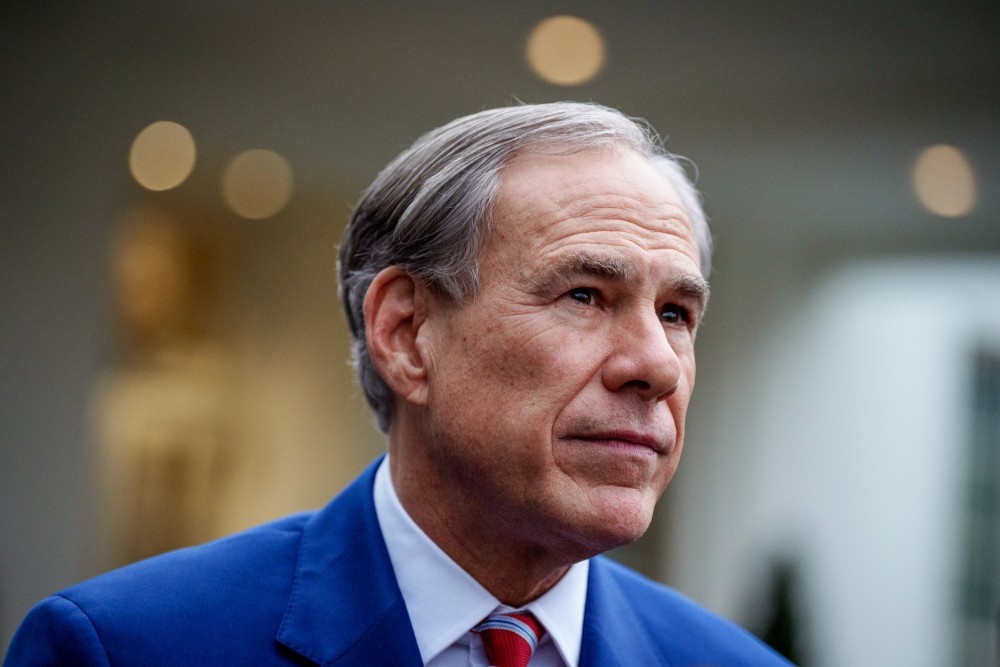
Texas Gov. Greg Abbott at the White House on Feb. 5.
Texas in the U.S. Passes Transgender Bathroom Law, Becoming the 20th State to Implement Such Restrictions
Greg Abbott, Governor of Texas in the U.S., signed a bill on a Monday that prohibits transgender individuals from using restrooms consistent with their gender identity in state-owned buildings and public schools, including universities. Institutions that violate the law could face fines of up to $125,000. The bill took a decade to develop; Texas first considered a similar measure in 2015 and again in 2017, but it failed to pass on both occasions. Part of the reason was the nationwide backlash against North Carolina’s HB2, known as the "bathroom bill," which led to boycotts by major corporations and musicians until the state repealed it in 2017.
Where bathroom access is restricted
Nineteen states restrict transgender people's access to bathrooms.
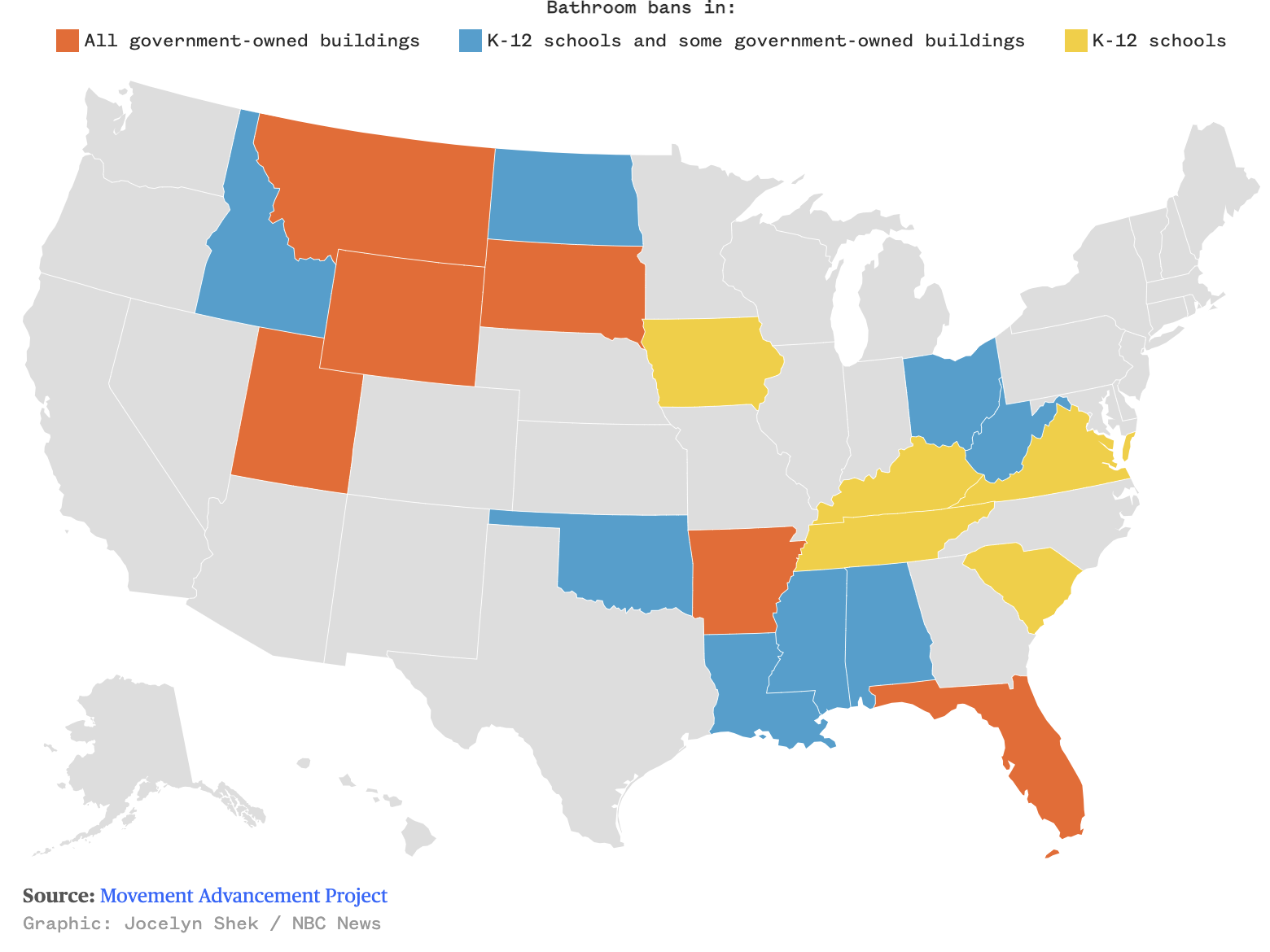
Now, with changes in the environment, Texas will become the 20th state in the U.S. to restrict transgender people’s access to restrooms, and the law will take effect on December 4. In a statement posted on social media, Abbott described the bill as a "common-sense public safety measure."
Notably, the law’s impact extends beyond restrooms in public buildings: it also requires jails and prisons to house inmates based on their sex at birth, and prohibits transgender women (or individuals assigned male at birth) from accessing services at women’s domestic violence shelters. The only exception is for minor children of women receiving services at such shelters.
During the bill’s debate, State Representative Angelia Orr, a Republican, referred to transgender women as "men" and stated that the measure was intended to protect the safety of women and girls. Proponents of bathroom restrictions have long used safety concerns to justify limits on sex-segregated spaces. However, a 2018 study by the Williams Institute at UCLA School of Law found that allowing transgender people to use facilities aligned with their gender identity does not increase safety risks.
Initially, the bill stipulated fines of $5,000 for a first offense and $25,000 for subsequent offenses by institutions. But just before the vote to pass the bill last month, the state House of Representatives adopted an amendment that raised the fines to $25,000 for a first violation and $125,000 for subsequent ones. According to The Texas Tribune, this made the bill the most financially punitive bathroom restriction in the U.S.
Lawmakers opposing the bill also noted that it would expose transgender people and those who do not conform to gender stereotypes to more harassment in restrooms. During the bill’s debate last month, Representative Jessica González, a Democrat, mentioned that the Texas State Capitol already had bathroom restrictions in place, and she had been falsely accused of entering the wrong restroom. González, a cisgender woman with short hair, asked Orr how the bill would protect people who might be wrongly accused of using the wrong restroom and harassed as a result. Orr responded that the bill did not address such cases.
North American Editorial Office: Robin
Disclaimer: Some content is cited from open internet sources for non-commercial reference. Contact us for any infringement.
Related Content
US: Families and Friends Turn to Crowdfunding on Transgender Day of Remembrance to Bury and Honor Trans Loved Ones
US: Actress Abbi Jacobson Says She and Wife Pretend to Be Sisters in Certain States Out of Safety Concerns

US: Civil Rights Attorney Launches Free 'Trans Data Initiative' Archive Tracking 8,900 Bills and Over 500 Court Cases
US: Grand Jury Indicts Maximum-Security Prisoner on First-Degree Murder Charge in Death of Hawaii Trans Woman Inmate
US: New Massachusetts Nonprofit Offers Free Telehealth Trans Youth Care Without Federal Funding
US: Transgender Teen Testifies in Kentucky Court Against School Restroom and Pronoun Restrictions Under SB 150