
Two Men in Indonesia's Aceh Province Publicly Caned for Hugging and Kissing, Raising Concerns Over LGBTQ Rights
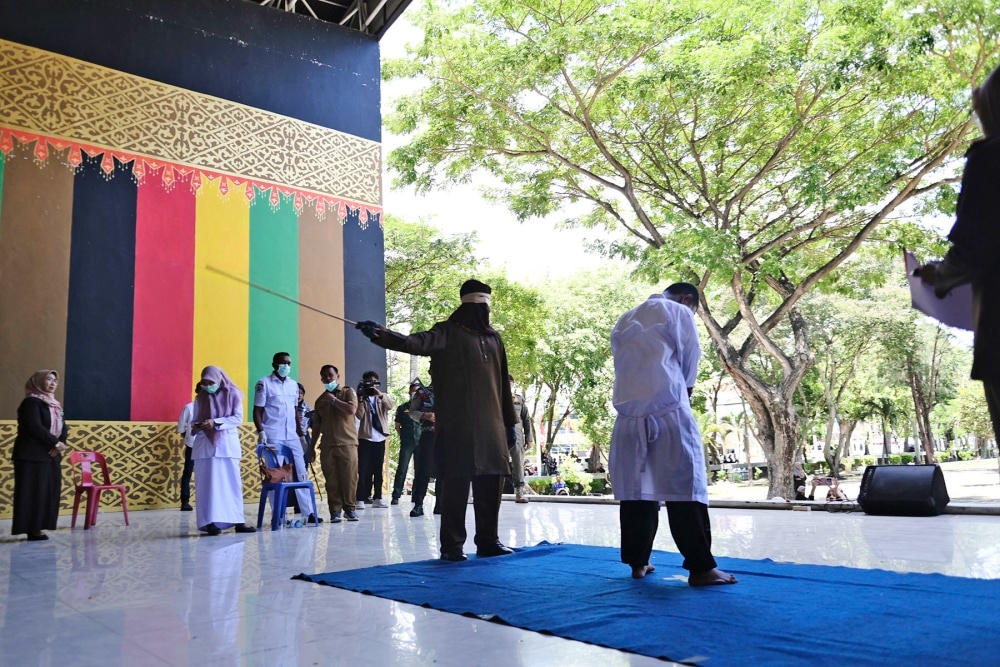
An official uses a rattan cane Tuesday to whip one of two men convicted of violating Islamic law by hugging and kissing in Banda Aceh, Indonesia.
In Indonesia's conservative Aceh province, two men were publicly caned alongside other violators on a Tuesday after an Islamic Shariah court found them guilty of violating Islamic law by hugging and kissing—an act the court ruled could lead to prohibited sexual relations. The incident has once again brought Aceh's Shariah implementation and LGBTQ rights issues into the public spotlight.
On the day, approximately 100 spectators witnessed the caning on a stage at Bustanussalatin City Park in Banda Aceh. The two men, aged 20 and 21, were whipped dozens of times on their backs with rattan canes by a group of people wearing robes and hoods. Under Aceh's regulations, moral offenses—including homosexual sex and sex between unmarried individuals—can result in up to 100 lashes. Caning is also imposed in the province for gambling, drinking alcohol, women wearing tight clothing, and men failing to attend Friday prayers.
Court records stated that Aceh's religious police claimed to have found the two men engaging in "hugging, kissing, and other acts deemed by the court to be related to sexual behavior" in a public park bathroom. The court ultimately sentenced each man to 80 lashes. In addition to the two men, eight other people were publicly caned the same day for adultery and gambling.
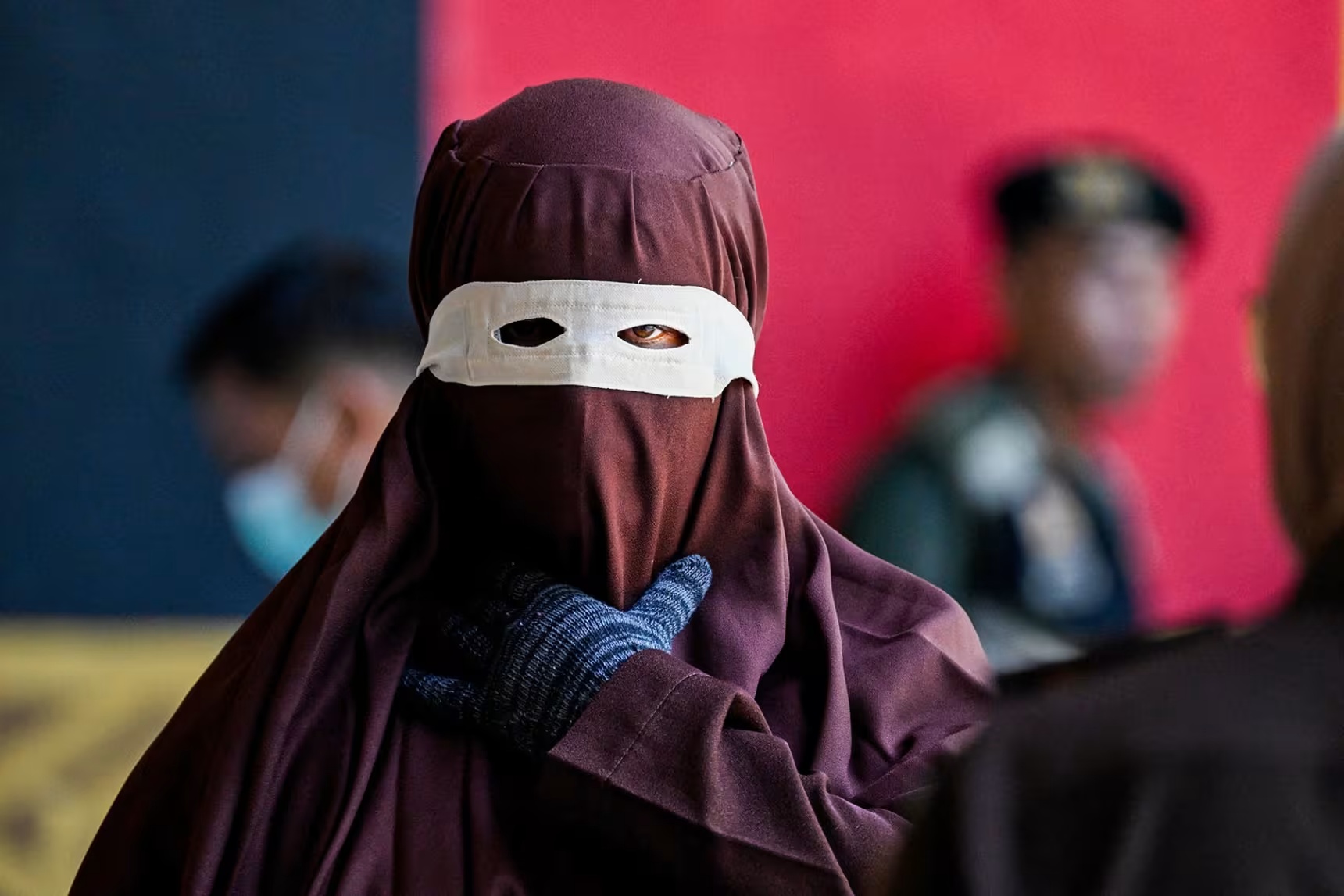
A member of the Sharia police prepares to cane a man.
Tracing the case, the two men were arrested in April at Taman Sari City Park in Banda Aceh. At the time, residents reported to patrolling police that they had seen the two enter the same park bathroom; police later found the men kissing and hugging inside. Court documents also noted that the pair had met through an online dating app and agreed to meet at the park.
As Indonesia's only province implementing Islamic Shariah law, Aceh has handed down caning sentences in four cases related to homosexuality since introducing Shariah, establishing a religious police force, and setting up a Shariah court system in 2006. It is understood that the Indonesian central government allowed Aceh to implement Shariah at the time as a concession to end the province's long-running separatist insurgency. While Indonesia's national criminal code does not regulate homosexual acts, the central government has no authority to abolish Aceh's Shariah law. However, the central government previously pressured Aceh officials to drop an earlier draft law that would have imposed the death penalty by stoning for adultery.
In 2015, Aceh expanded the scope of its Islamic regulations and criminal code, extending Shariah law to non-Muslims (who make up approximately 1% of the province's population). This February, two other men were publicly caned at the same park after a Shariah court convicted them of having sex.
Regarding rights disputes, in 2016, a coalition of human rights organizations filed a petition with Indonesia's Supreme Court, seeking a review of Aceh's local regulations permitting caning—but the request was rejected. That same year, Indonesia's Ministry of Home Affairs sent a letter to Aceh's governor regarding caning, noting that local laws in Indonesia should only be applied to minor offenses.
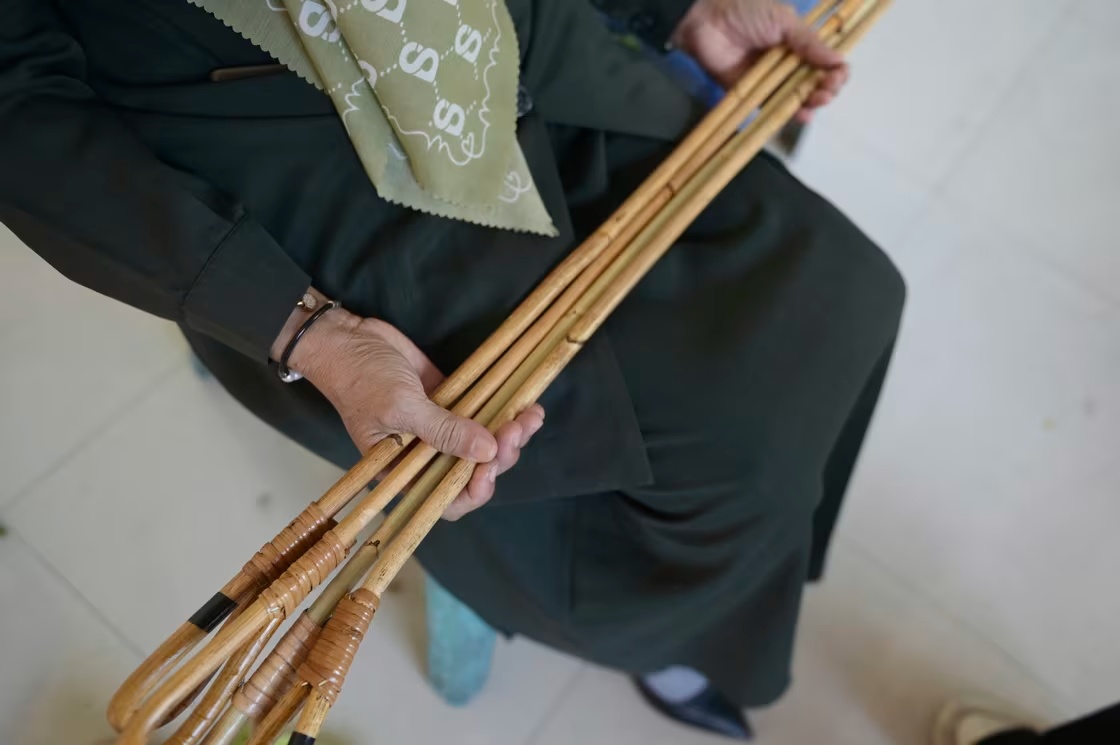
An official holds the rattan sticks used in the canings.
Maidina Rahmawati, acting executive director of Indonesia's Institute for Criminal Justice Reform, stated that caning is a form of corporal punishment, and Indonesia has ratified an international convention mandating the abolition of inhumane penalties. "Both public caning itself and the practice of caning as a punishment violate multiple Indonesian laws and regulations, and are also contrary to Indonesia's human rights interests, as this practice harms Indonesia's international image," Rahmawati added. She noted that shifting political dynamics had contributed to the policy's implementation: "At the time, it seemed that implementing this policy was the right thing to do, that it had to be promoted, and that it needed to be advocated for to support Aceh's Shariah-based governance model."
Amnesty International issued a statement on the same day, describing the caning of the two men as "a disturbing act of state-sanctioned discrimination and cruelty." Montse Ferrer, the organization's Regional Research Director, stated in the release: "This punishment is a horrifying reminder of the institutionalized stigma and abuse faced by LGBTQ+ individuals in Aceh. Consensual intimate relationships between adults should never be criminalized."
Asian Editorial Department: Lu Junxiu
Related Content

Transgender Day of Remembrance: 273 trans people reported murdered worldwide in the past year, one every 32 hours

Global: Homosexuality Remains Illegal in 65 Nations, Down From Over 90 at Turn of Century

Philippines: House Panel Approves in Principle Bills Related to SOGIESC Legislation

South Korea: Entertainer Park Ji-yoon Rejects Infidelity Ruling, Stating Male Friend Involved Is Gay
Japan: Kyushu Rainbow Pride 2026 Lights Up Fukuoka as Prefecture Promotes Partnership System

Japan: Two Fathers Redefine Family as Trans Man Postpones Surgery to Carry Children