
A Contest of Law and Identity: Taiwan's Transgender Community Challenges "No-Surgery" Gender Marker Changes in Court

2021, the first transgender person in Taiwan successfully changed
In Taiwan, a legal battle concerning bodily autonomy and legal identity is underway. The core dispute revolves around whether transgender individuals must undergo sexual organ removal surgery to change the gender marker on their identification documents.
The current regulation stems from a 2008 administrative directive, which requires applicants to provide two psychiatric diagnostic certificates and proof of completed sex organ removal surgery. However, for many transgender individuals, this threshold is insurmountable. "Xiao Tai-yang" (pseudonym), a 48-year-old transgender man, has suffered deeply from this. He reports frequent embarrassment in public settings like hospitals due to the mismatch between his appearance and his ID, such as nurses searching for a "Miss" right in front of him. He longs to obtain a male identity "in a way that doesn't harm my body", but has chosen not to undergo medical procedures due to surgical risks and personal beliefs.
High costs and health risks are the primary reasons preventing transgender people from completing the surgery. Gender-affirming surgery is not only expensive (female-to-male procedures cost at least NT$600,000 to $800,000) and not covered by health insurance, but it also carries risks of complications and long-term health issues, such as osteoporosis, and requires lifelong hormone treatment.
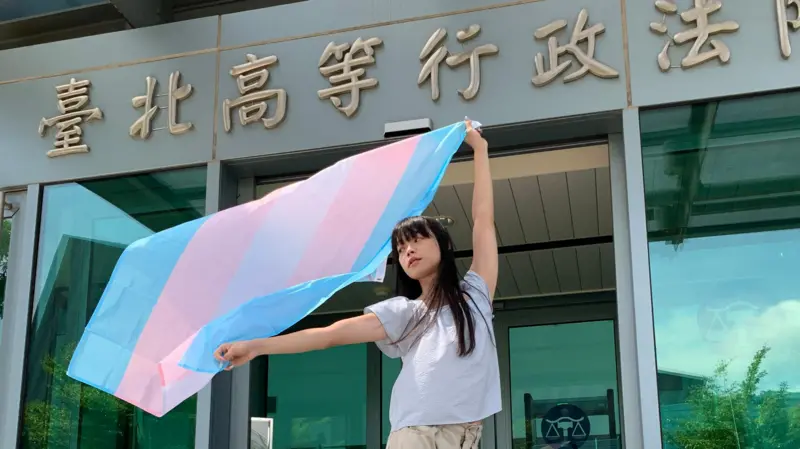
their gender. Transgender woman Vivi filed a lawsuit in a Taiwanese court to change her gender registration without surgery. Some
Consequently, many have chosen to seek change through the judicial system. After his application to change his gender registration was denied, Xiao Tai-yang filed an administrative lawsuit, becoming one of nearly 15 similar cases currently active.
The legal community also harbors doubts about this regulation. In 2023, Taiwan's highest administrative court ruled in one judgment that the relevant administrative directive lacks a legal basis, and that gender identity falls under the constitutional protections of personality freedom and health rights. Former Grand Justice Chan Sen-lin also pointed out that the mandatory surgery requirement constitutes a major infringement on the rights to bodily integrity and health, violating the "principle of proportionality".
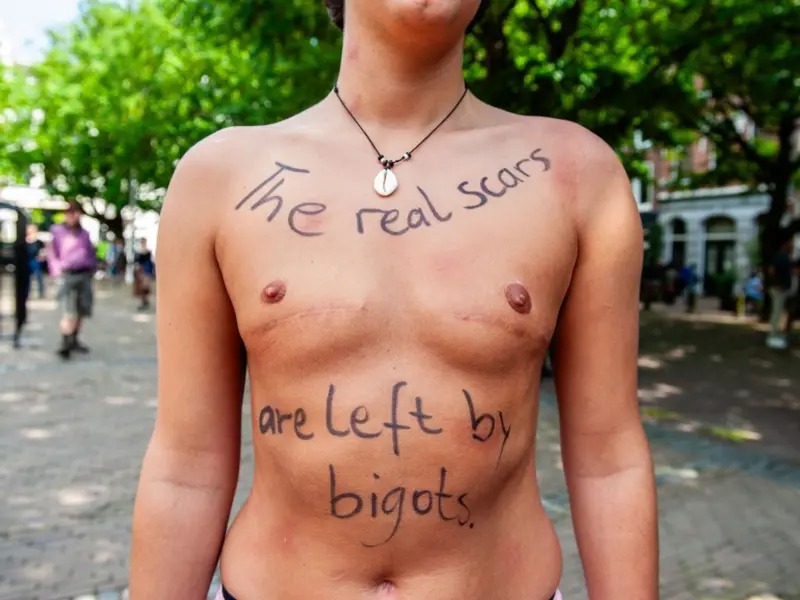
Some transgender people undergo sex reassignment surgery to achieve their gender identity
Although at least seven transgender individuals have successfully changed their gender marker without surgery via the courts, these victories have not led to systemic change. Government authorities have not yet amended the relevant administrative rules, meaning only the specific individuals who win their lawsuits can change their gender based on the court's decision, while all others must still comply with the surgery requirement.
For the transgender community, gender identity exists on a diverse spectrum. Vivi, a 28-year-old transgender woman and also a plaintiff, believes she is a woman and does not need "to see a doctor to prove it". She notes that surgery is not a prerequisite for achieving self-identification. Dr. Chen Mu-hung, a psychiatric director, also stated that the current rule wrongly assumes all transgender people cannot accept their own sexual characteristics, which is inconsistent with the psychiatric understanding of "gender dysphoria".
Under these systemic barriers, the daily lives of many transgender people are fraught with challenges. "Xi-ren" (pseudonym), a 27-year-old transgender man, mentioned that being unable to change his ID card leads to being "forcibly outed" when seeking employment or housing. A 2023 survey showed that transgender individuals commonly face difficulties in the workplace and healthcare settings; nearly 20% had been refused employment due to their gender identity, and some even choose not to seek medical care when ill as a result. This legal challenge is still awaiting a systemic solution that can benefit everyone.
Asian Editorial Department: Lu Junxiu
Related Content

Transgender Day of Remembrance: 273 trans people reported murdered worldwide in the past year, one every 32 hours

Global: Homosexuality Remains Illegal in 65 Nations, Down From Over 90 at Turn of Century

Philippines: House Panel Approves in Principle Bills Related to SOGIESC Legislation

South Korea: Entertainer Park Ji-yoon Rejects Infidelity Ruling, Stating Male Friend Involved Is Gay

Japan: Kyushu Rainbow Pride 2026 Lights Up Fukuoka as Prefecture Promotes Partnership System

Japan: Two Fathers Redefine Family as Trans Man Postpones Surgery to Carry Children