
Canada: Legal Risk Map Highlights Alberta Restrictions as BC Veers Rightward
In late October 2026, Canadian transgender rights advocate and legal researcher Celeste Trianon published the October 2026 edition of the Canada Anti-Trans Legislative Risk Map. The ongoing legal monitoring initiative finds no sign of a slowdown in anti-trans legislation across Canada in 2026, tracking the rapid polarization of provincial policy environments across the federation. In the latest assessment, Alberta continues to be designated as the country's most restrictive jurisdiction harboring the worst active anti-trans laws, while British Columbia emerged as the sole jurisdiction upgraded since the March edition, moving directly to high-risk status.
According to the classification framework published by Trianon, Canadian provinces and territories are organized into four distinct risk categories based on legislative measures and executive directives. Alberta, under the governing United Conservative Party, is shaded deep red to represent the most punitive legal climate — its package of laws restricting gender-affirming care for youth (in effect since December 2025, shielded by the notwithstanding clause against a court injunction), forced school pronoun notifications, and athletic participation bans — and is marked with an imminent-risk warning for further restrictions. Saskatchewan, which invoked Section 33 of the Canadian Charter of Rights and Freedoms (the notwithstanding clause) to pass parental consent rules, shares the high-risk orange category alongside Quebec, whose Parti Québécois minority government has proposed banning trans women from women's spaces, and British Columbia. Ontario, the Northwest Territories, Nunavut, and the federal jurisdiction remain at moderate risk, while Yukon, Manitoba, Newfoundland and Labrador, New Brunswick, Nova Scotia, and Prince Edward Island are rated "no reason to fear."
The focal point of the October revision is the concerning political shift within British Columbia. Trianon notes that under the previous NDP-Green majority, the province saw the highest number of anti-trans bills in Canada: five bills introduced between October 2025 and February 2026 — restricting gender-affirming care for minors, banning diversity, equity and inclusion programs at post-secondary institutions, banning flags in schools, deeming affirmation of trans youth to be child abuse, and repealing the Human Rights Code outright — were all voted down at first reading. Now that the Conservatives have taken power in B.C., Trianon warns that similar bills may be debated and even adopted within the next year, hence the upgrade to high risk with an imminent-risk warning. The far-right fringe party OneBC went further in its 2026 election platform, proposing a "Gender Ideology Task Force" to strip gender identity protections from the Human Rights Code. The shift has alarmed queer families across the country, who fear the shrinking map of safe jurisdictions and face renewed anxiety over interprovincial relocation.
Analysis: the risk index underscores the mounting centrifugal strains challenging Canadian federalism. The expanding willingness of provincial authorities to deploy executive directives and invoke the notwithstanding clause to shield restrictive statutes from judicial review threatens the nationwide uniformity guaranteed by the Charter. By providing rigorous, empirical legal mapping, civil rights researchers empower vulnerable families with indispensable risk navigation while calling upon federal authorities and civic institutions to vigorously defend foundational human rights against localized partisan retrenchment.
North American Editorial Office: Liam Smith
Source: Celeste Trianon legal research
References
Canada Anti-Trans Legislative Risk Map Data Portal:https://celeste.lgbt/map
Canadian Legal Information Institute (CanLII - Charter Jurisprudence):https://www.canlii.org/
Department of Justice Canada - Canadian Charter of Rights and Freedoms:https://www.justice.gc.ca/eng/csj-sjc/rfc-dlc/ccrf-ccdl/
Related Content

US: Families and Friends Turn to Crowdfunding on Transgender Day of Remembrance to Bury and Honor Trans Loved Ones
US: Actress Abbi Jacobson Says She and Wife Pretend to Be Sisters in Certain States Out of Safety Concerns

US: Civil Rights Attorney Launches Free 'Trans Data Initiative' Archive Tracking 8,900 Bills and Over 500 Court Cases
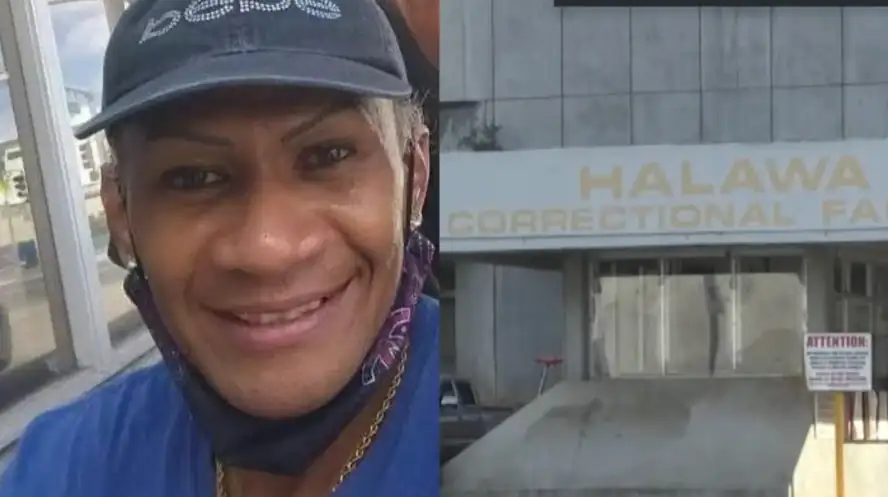
US: Grand Jury Indicts Maximum-Security Prisoner on First-Degree Murder Charge in Death of Hawaii Trans Woman Inmate
US: New Massachusetts Nonprofit Offers Free Telehealth Trans Youth Care Without Federal Funding
US: Transgender Teen Testifies in Kentucky Court Against School Restroom and Pronoun Restrictions Under SB 150