
Brazil: One Dead, One Injured in Post-Election Violence After Lula's Runoff Win
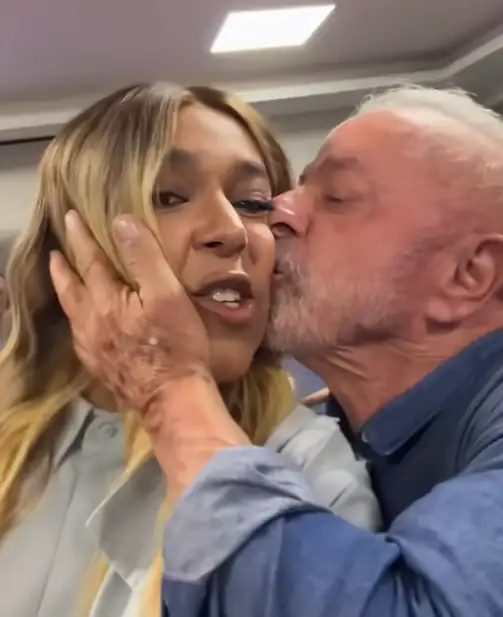
This image is for illustrative purposes only and is not directly related to this story. Image source: Antonio Herrera Palacios
On October 25, 2026, Luiz Inácio Lula da Silva won Brazil's presidential runoff with about 51.8 percent of valid votes, defeating Flávio Bolsonaro, who took 48.21 percent, and securing a historic fourth term; he is due to take office in January 2027. Bolsonaro had led the first round on October 4 with about 47 percent to Lula's 45 percent. News of Lula's victory set off spontaneous celebrations across Brazil, but election-related violence also erupted in several cities.
In Santarém, in the state of Pará, on the evening of October 25, a woman riding a motorcycle was celebrating Lula's victory along the waterfront on Avenida Adriano Pimentel when she was attacked by a group of Bolsonaro supporters dressed in green and yellow. The group hurled drink cups, plastic bottles and glass containers at her; startled, she lost control, collided with another vehicle and fell to the ground, where she was kicked and insulted. One woman tried to hit her with a broken flagpole before a man intervened and helped her leave. Videos circulating online captured the attack, which nearly became a lynching. She filed a formal complaint on the afternoon of October 26 and underwent a forensic examination, and Santarém's civil police have opened an investigation. Her lawyer said she suffered knee abrasions, burns on her leg from the motorcycle engine, spinal pain and damage to her vehicle, and is receiving medical and psychiatric follow-up; after the video spread, she also received homophobic threats and abuse online. The defense has asked investigators to examine intentional bodily injury, property damage, insult, homophobia and a possible political motive; the motives remain under investigation and are so far only allegations in the complaint, not conclusions.
In Santos, in the state of São Paulo, at around 3 a.m. on October 24, a campaign rally for Lula's re-election was under way, featuring a samba performance by the band Esquerdantina. Marcelo de Oliveira Rocha, a 30-year-old environmental engineer and master's student in marine ecology at the Federal University of São Paulo (Unifesp), briefly stepped away to use the bathroom and was surrounded, beaten and robbed of his phone and other belongings; part of the attack was livestreamed on TikTok by the attackers. Friends who noticed his prolonged absence found him unconscious at the corner of Avenida Conselheiro Nébias and Rua Henrique Ablas; he was taken to Santa Casa de Santos and transferred to a hospital in São Paulo, where brain death was confirmed on the afternoon of October 26. On October 28, Santos sectional police chief Rubens Eduardo Barazal Teixeira told a press conference that police had ruled out a political or homophobic motive and classified the case as latrocínio, robbery followed by death: the suspects belonged to a gang committing phone and necklace robberies in the area that night, with at least five other similar robberies the same night, and eight suspects have been identified, six of them minors and two adults. The victim's father had suspected a political or homophobic motive, and the band's statement mentioned that suspicion, but police have excluded it. The two incidents came as the federal government announced reinforced investigations into 45 cases of political violence registered between October 24 and 25, including 10 homicides. The polarized post-election climate and the violence against people celebrating the result highlight the tensions facing Brazilian society — and the homophobic abuse directed at the Santarém victim online shows why many LGBTQ+ Brazilians fear for their safety.
South American Editorial Office: Isabella Rodriguez
Sources: G1, São Paulo State Public Security Secretariat, USA Today, CNN
References:
Related Content
Argentina: 70-Year-Old Man Sentenced to Life for Hate-Motivated Arson Murder of Three Lesbian Women

Chile: Oscar-Winning Director Sebastián Lelio Dies at 52
Colombia: Court Overturns President's Censorship Order, Mandates Return of LGBTQ+ Art to National Museum
Brazil: Outrage as Police Release Far-Right Suspect Who Stabbed Lesbian Woman During Election
Brazil: Trans Legislator Erika Hilton Celebrates Lula's Presidential Reelection Victory
Fact Check: Viral Claim That Colombia Banned LGBT Art is AI-Generated Hoax