
Oakham Town Council Votes to Fly LGBTQ+ Flag Only on First and Last Days of History Month
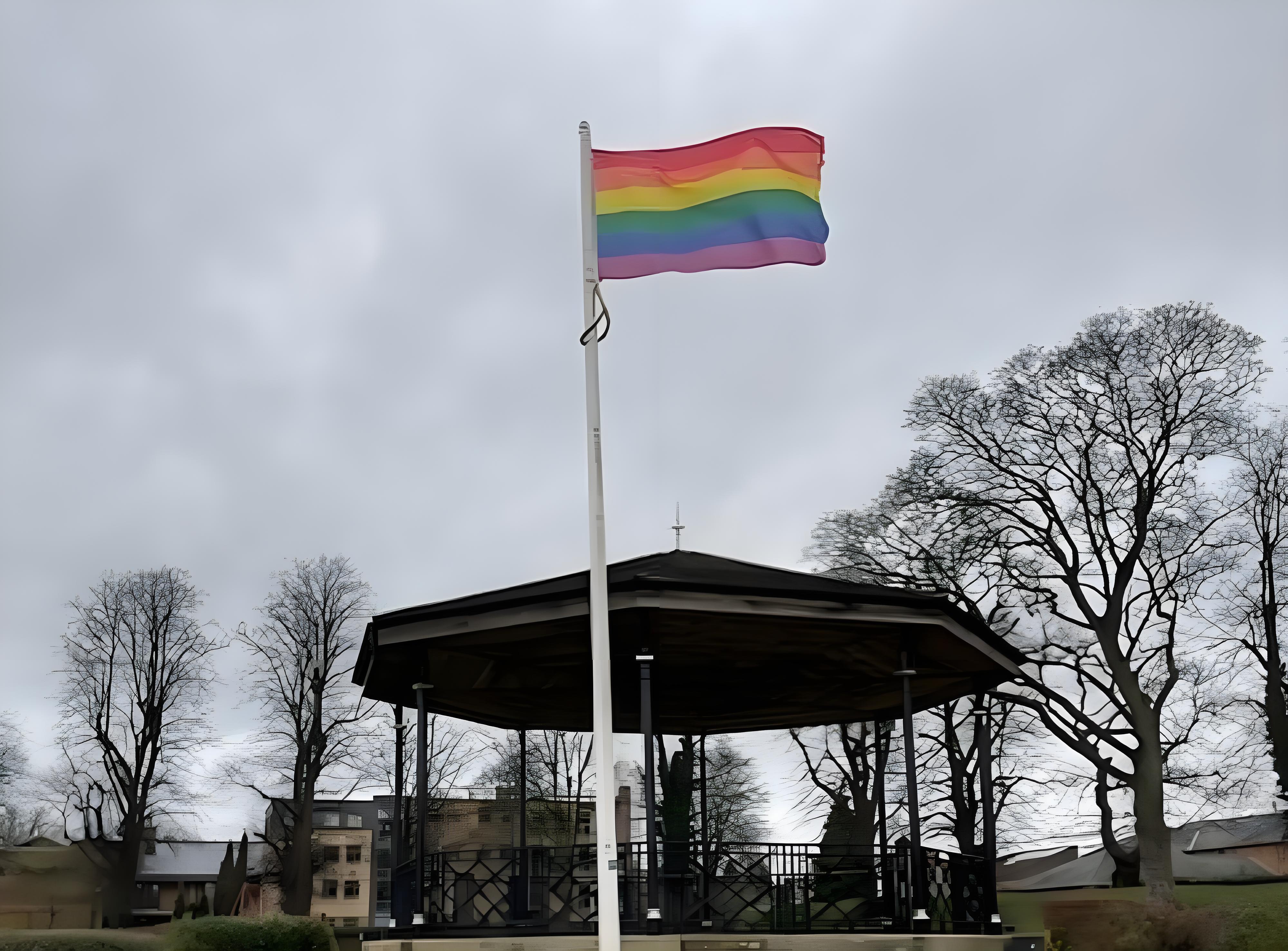
Oakham Town Council votes on motion to fly LGBTQ+ flag to mark LGBTQ+ History Month (Photo: OTC)
In Oakham, a town in Leicestershire, United Kingdom, the town council debated and ultimately decided against flying the LGBTQ+ inclusive progress flag for the entire month of February at Cutt's Close to mark LGBTQ+ History Month. The discussion took place during a council meeting on Wednesday, January 14. Two councillors proposed the motion, advocating for the practice to become an annual tradition. The previous year marked the first time the flag was raised at the location for the observance.
The proposal highlighted the significance of February as LGBTQ+ History Month, coinciding with the 2003 repeal of Section 28, a provision that had severely limited local authorities and schools from discussing or presenting homosexuality. The month also serves as a time to reflect on the persecution of homosexuals in Nazi concentration camps and their subsequent exclusion from recognition as victims. Raising the flag was presented as a means of acknowledging this history and demonstrating the council’s commitment to equality while learning from past legislative discrimination.
The council vote on the motion ended in a tie, resolved by the chairman’s casting vote in favor of an amendment. The amendment, proposed by another councillor, modified the original request so that the flag would be flown only on the first and last days of February rather than throughout the month. The amended motion passed narrowly.
One of the councillors who supported full-month display told media that the decision substantially diminishes the purpose of observing LGBTQ+ History Month, an event recognized nationally and internationally since 1994. The deputy mayor, in a public statement, affirmed the council’s commitment to recognizing LGBTQ+ residents and promoting inclusion. However, he explained that the amendment sought a balanced approach to avoid creating disparities among commemorations and to prevent establishing precedents that could prove difficult to maintain consistently. He noted that nationally significant observances such as Armed Forces Day and Remembrance Day are marked with single-day acknowledgments, making a month-long display for one group challenging to justify while others receive shorter recognition. Flying the flag on the opening and closing days, he argued, provides a visible and meaningful show of support while aligning with established practices for other occasions.
The outcome has sparked discussion within the community. Proponents of the original motion argue that a full-month display better reflects the depth of historical reflection and equality commitment; others maintain that equitable treatment across commemorative events is essential to avoid unsustainable precedents. The council’s decision illustrates the considerations local authorities face when balancing recognition of diverse group histories and observances.
European Editorial Office: John
Related Content
Spain: Madrid Leader Ayuso's Rally Remarks on Family and Gender Spark Debate Ahead of November 29 Vote
UK: Annual Cancer Cases Among Trans People in England Could More Than Double Within a Decade, Study Finds

UK: Cisgender Male Boxer Disqualified Before U-19 World Championships Over Missed Genetic Sex Test

UK: Almost Half of LGBTQ+ Teens Face Online Blackmail, Including Threat of Outing
Russia: LGBTQ Christians Worship in Hiding Amid State Crackdown and Church Condemnation

UK: Home Secretary Shabana Mahmood Backs Ban on Police Marching in Pride Events in Uniform, Drawing Pushback From Senior Officers