
India: Two Trans Women Held Overnight With Male Detainees After Delhi Protest
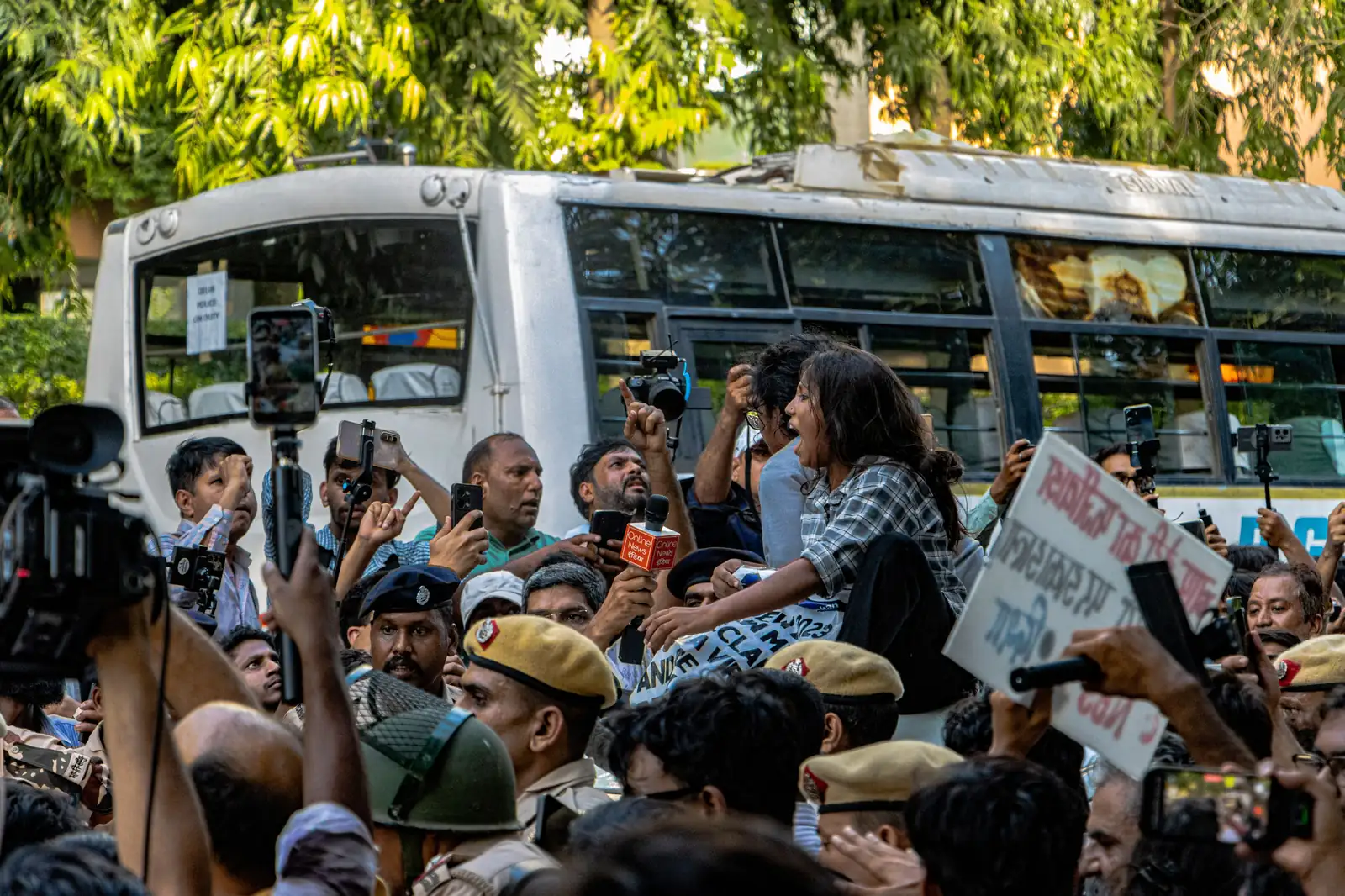
This image is for illustrative purposes only and is not directly related to this story. Image source: Shantum Singh
On October 16, 2026, as protests against the Election Commission's Special Intensive Revision (SIR) of electoral rolls continued in New Delhi, Delhi Police detained large numbers of protesters across the city centre. Lawyer Raghavi disclosed the same day that two trans women among those detained were being held at Connaught Place Police Station; after the other women detainees were released, the two remained in custody overnight, held alongside male detainees.
According to Raghavi, police said the two would be produced before a Special Executive Magistrate (SEM) court on the morning of October 17 and released afterwards. However, the Hindustan Times reported on Saturday evening that they had not been released by then; their names have not been made public. Raghavi said the two were terrified and questioned why police had decided to keep them in custody overnight. Neha Bora, national president of the All India Students' Association, who was also detained on October 16, was released in the early hours of October 17.
On October 17, women's and student organisations, including the All India Democratic Women's Association (AIDWA), marched to Delhi Police Headquarters and submitted a memorandum demanding action against personnel accused of sexual harassment and violence against women, transgender and non-binary protesters during the protest handling, and an end to the targeting of those groups. As of Saturday evening, Delhi Police had issued no official statement on the specific allegations. Police said around 150 people were detained across central Delhi on October 16, with action taken under preventive provisions of the Bharatiya Nagarik Suraksha Sanhita (BNSS).
The protests stem from opposition challenges to the fairness of the electoral roll revision, with protesters demanding the resignation of Chief Election Commissioner Gyanesh Kumar and a halt to the SIR. India's Supreme Court recognised transgender persons as a "third gender" in 2014, and the Transgender Persons (Protection of Rights) Act 2019 established their legal status; rights groups have nevertheless repeatedly criticised the practice of holding trans women with male detainees. Analysis: the case again exposes the gap between India's legal protections for gender minorities and their implementation in protest policing.
Asian Editorial Department: Kim Min-jun
Related Content

Hong Kong: Man Who Concealed Sex on Dating App Ordered to Pay HK$367,000 for PTSD

Japan: One-Third of LGBTQ+ Workers Consider Leaving Over Workplace Culture, Study Finds

Japan: Survey Finds Workplace Coming-Out Rate Three Times Higher at Small Firms

Japan: J-Pop Star Shinjiro Atae Publicly Comes Out as Gay

Japan: Nippon Sheet Glass Extends Marriage Benefits to Same-Sex Partners

Taiwan: Taipei Bar Raid Sparks Southeast Asian LGBTQ Concerns Over Friendly Image